
4.9/5 star reviews
Trusted By 100+ Families
One Acceptance Letter Can Change a Lifetime Trajectory
But Only If Your Child Is Positioned Correctly
Get a Personalized College Admissions Competitiveness Report Created by an MIT Admissions Insider — See exactly how your child compares to successful applicants and what strategic gaps must be fixed before application season
If you're the parent of a high-achieving high school student, you're probably feeling this right now:
Your child has impressive grades and test scores—but so does everyone else applying to top schools
You're watching other families hire $15,000 consultants while wondering if you're doing enough
Your child is busy with activities, but you're not sure if they're the right activities for elite admissions
You keep hearing about "differentiation" and "spike" but have no idea if your child has one
Summer is approaching and you don't know if they should do research, an internship, or something else
And worst of all—you have no objective way to know if your child is actually competitive for the schools they're targeting
Show Me Where My Child Stands
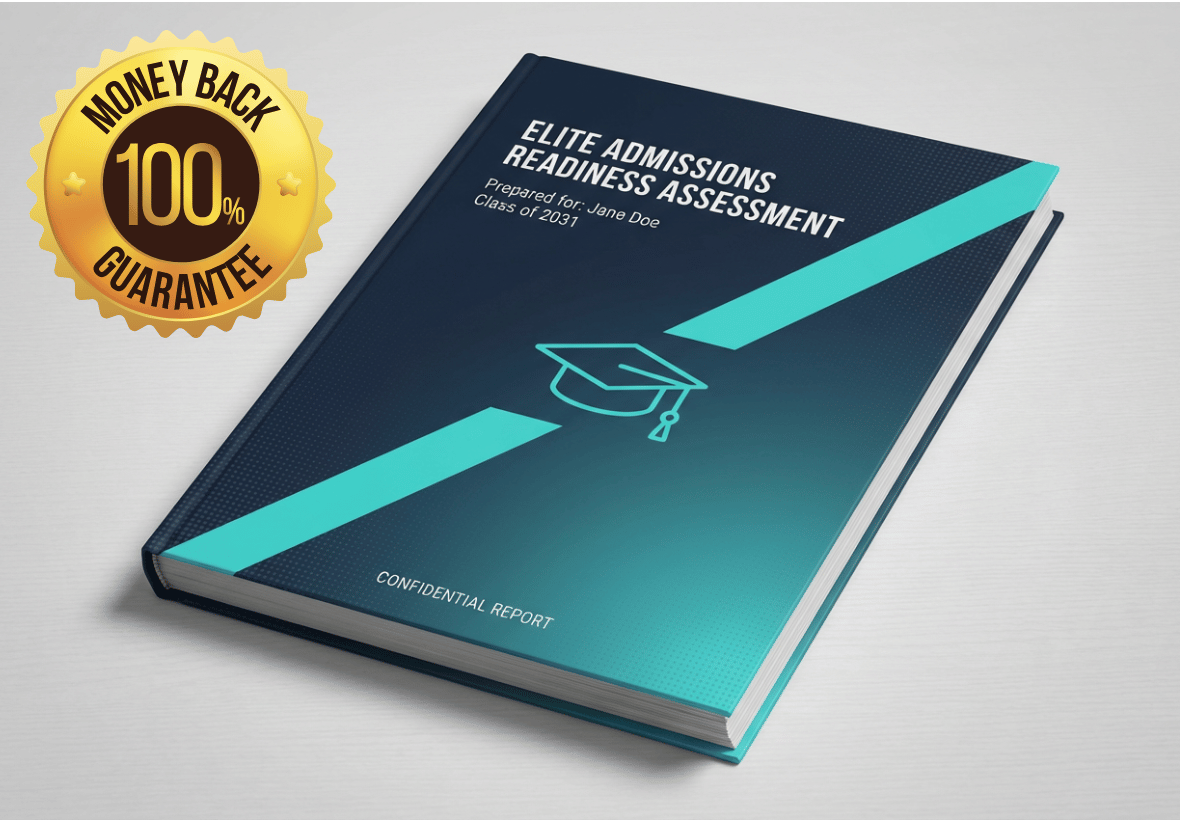
Custom written evaluation specific to your child
Strengths & differentiation analysis
Major competitiveness risk score
Specific positioning recommendations
Delivered within 3 days
Here's What Most Parents Don't Realize:
Your child isn't competing against "good students."
They're competing against 35,000+ other applicants who also have stellar GPAs, impressive test scores, and full activity lists.
At schools like MIT, Stanford, and the Ivies, 89% of applicants are academically qualified.
The difference between acceptance and rejection isn't grades or test scores.
It's strategic positioning.

The "Above Average" Trap
I've been an MIT admissions interviewer for over a decade.
And I see the same pattern every year:
Families confuse "strong student" with "competitive applicant."
Your child might be:
Top 5% of their class
Taking multiple AP courses
President of two clubs
Volunteering every weekend
And still not be positioned competitively for highly selective universities.
Why?
Because 700+ other applicants have the exact same profile.
The March Advantage (And Why Timing Matters)
Right now, you're in the golden window.
Seniors are done applying. Juniors haven't started yet.
This is positioning season—the critical months when strategic families:
Identify competitive gaps before they become fatal flaws
Optimize summer plans for maximum admissions impact
Build differentiation narratives before essay season
Course-correct rigor and activity trajectories
Develop authentic "spike" positioning
The students who get into top schools don't start in August.
They start in March.
By the time most families begin thinking about essays, the winners have already built the foundation for acceptance.

What If You Could See Your Child's Profile Through an Admissions Officer's Eyes?
What if you knew exactly where your child stands competitively?
What if you could identify:
✅ The competitive tier your child actually falls into (not where you hope they are)
✅ The rigor gaps that could sink an otherwise strong application
✅ The major-specific risks that most families miss completely
✅ The differentiation weaknesses that make profiles forgettable
✅ The strategic moves to make this summer (before it's too late)
✅ The activity positioning errors that destroy narrative coherence
And what if you could fix all of this—before essay season even begins?
My Story: From MIT Student to Admissions Insider
My name is Jenny, and I've been on every side of the elite admissions process.
As a Student:
I was admitted to MIT in 2004 with a full scholarship. I know what it takes to stand out in a pool of 35,000+ applicants because I did it.
As an Admissions Interviewer:
For over 10 years, I've conducted admissions interviews for MIT. I've seen the rubrics. I've watched brilliant students get rejected for fixable positioning errors.
As a Parent:
Two years ago, I watched a church friend's daughter—a 4.0 GPA, 1580 SAT, president of two clubs—get rejected from every Ivy League school she applied to. She was devastated. Her parents were confused. "What did we do wrong?"
The answer? Nothing was "wrong." She just wasn't positioned strategically.
She had the credentials but not the differentiation. The activities but not the narrative. The grades but not the "spike."
That's when I realized: most families have no idea how admissions officers actually evaluate their children.
They think:
"My child has a 4.0 GPA—they're competitive"
"They're taking 5 APs—that's rigorous enough"
"They're president of a club—that shows leadership"
But admissions officers see it differently. They're asking:
"Is this rigor trajectory impressive for their school context?"
"Does this activity list show authentic intellectual vitality or resume padding?"
"Is this student differentiated in their intended major's applicant pool?"
Most families never get answers to these questions until it's too late.
So I created the Elite Admissions Readiness Assessment™—the only comprehensive competitiveness analysis created by an actual MIT admissions insider.
In the past 18 months, I've helped:
127 families identify critical positioning gaps before essay season
43 students get accepted to Top 20 universities (including 8 to MIT)
Dozens of families save $10,000+ by avoiding consultants they didn't need
My mission is simple: Give families the insider intelligence they need to position their children competitively—before it's too late to fix the gaps.
Credentials:
MIT Class of 2008 (B.S. Brain and Cognitive Sciences)
MIT Admissions Interviewer (2008-2021)
127 Families Advised (43 Top 20 Acceptances)

Introducing: The Elite Admissions Readiness Assessment™
The Only Comprehensive Competitiveness Analysis Created by an Actual MIT Admissions Insider
In just 3 days, you'll receive a structured, 20+ page diagnostic report that reveals exactly where your child stands—and exactly what needs to change.
Here's What You'll Discover:
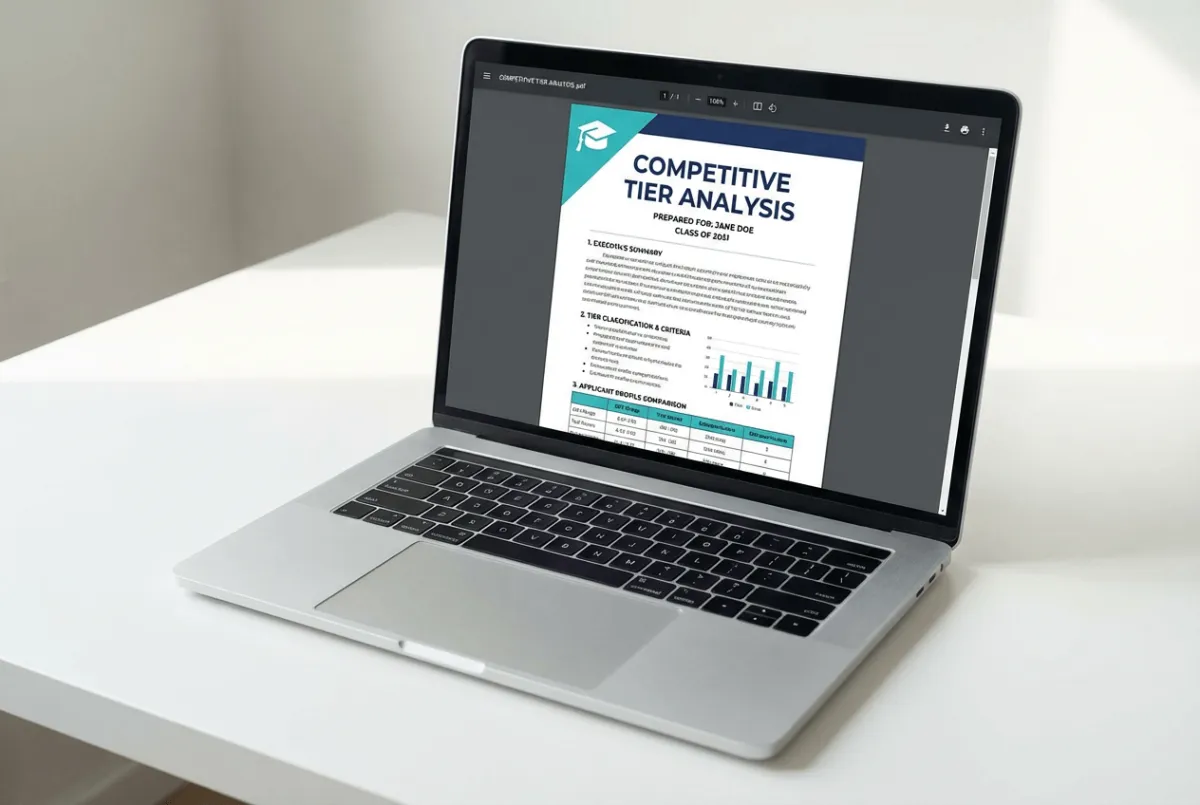
Competitive Tier Analysis
Your child's actual competitive positioning:
Based on their complete profile, you'll receive a calibrated assessment:
✅ Strong for Top 50 universities
✅ Competitive for Top 30 with identified risk flags
✅ Highly competitive for Top 20 with strategic leverage
✅ Reach-heavy risk profile requiring repositioning
This isn't generic encouragement. This is structured evaluation using the same frameworks admissions committees use.
No false hope. No sugar-coating. Just honest, expert analysis.
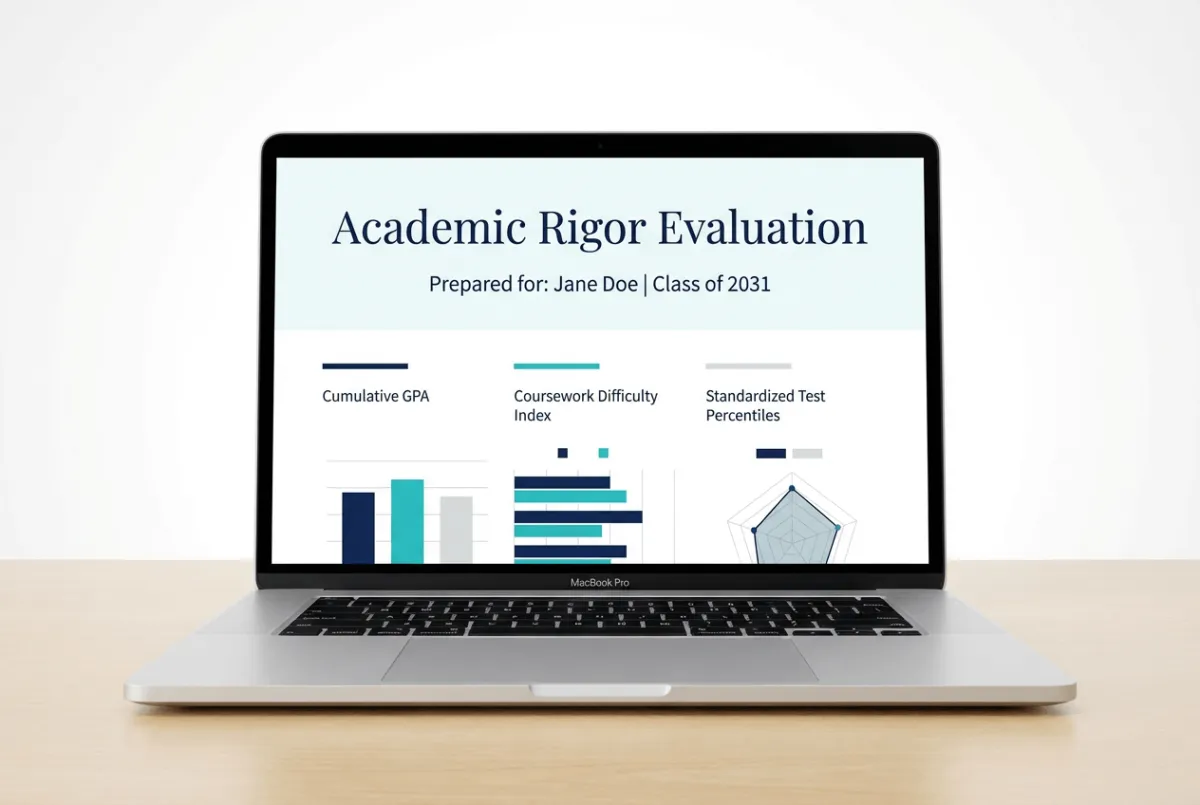
Academic Rigor Evaluation
The truth about your child's course trajectory:
✅ Course rigor strength relative to school context
✅ Senior year leverage opportunities
✅ Rigor gap warnings that could trigger rejection
✅ Comparative evaluation simulation
You'll see exactly how admissions officers perceive your child's academic profile:
"If reviewed at a highly selective institution, your academic profile would likely be perceived as..."
This section alone is worth the entire investment.
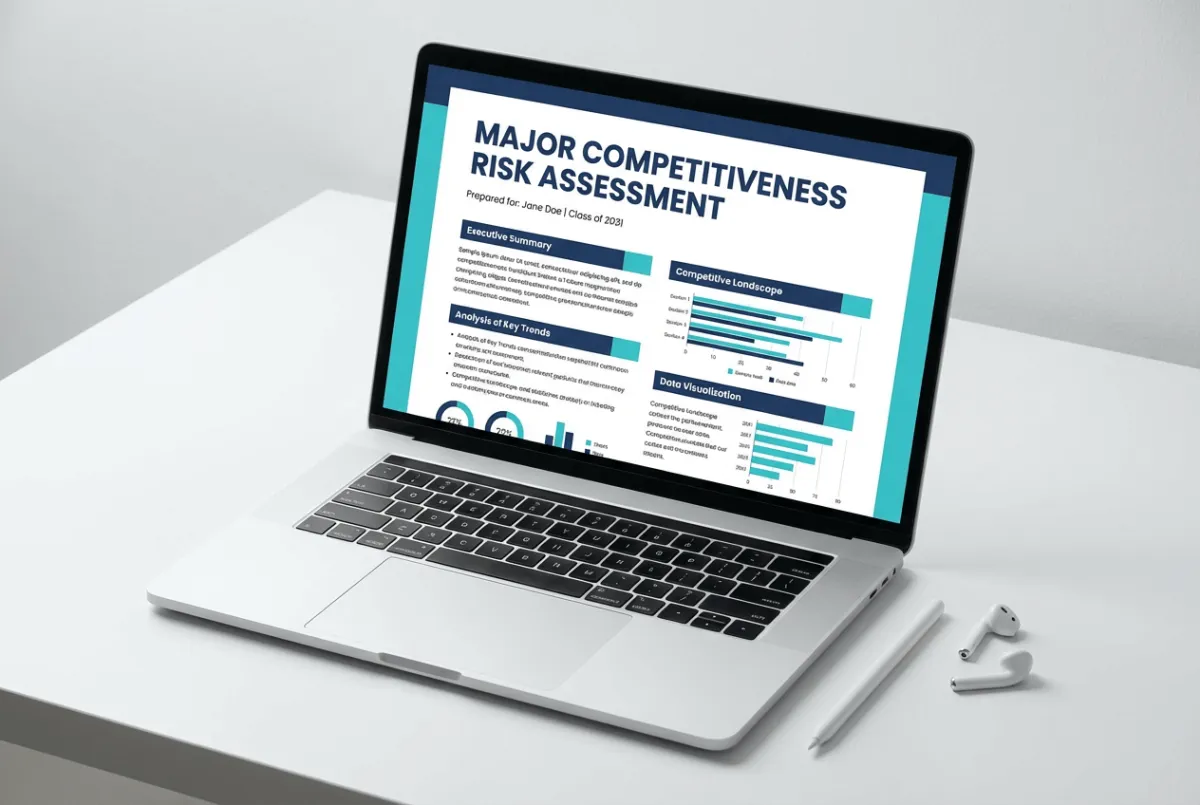
Major Competitiveness Risk Assessment
This is the analysis most families never get—and it's critical.
If your child is applying to Computer Science, Biology, Business, Engineering, or other saturated majors:
✅ Major saturation index – How crowded is this applicant pool?
✅ Differentiation requirements – What does it take to stand out?
✅ Alternate positioning strategy – Should they consider a different approach?
✅ Competitive benchmark – What do successful applicants in this major actually look like?
Example insight:
"Applying Computer Science without distinct technical differentiation (research, significant projects, or competition success) creates substantial risk at Top 20 institutions. Consider: alternate major positioning, summer technical differentiation, or target school recalibration."
This kind of strategic intelligence is normally only available to $15,000 consulting clients.
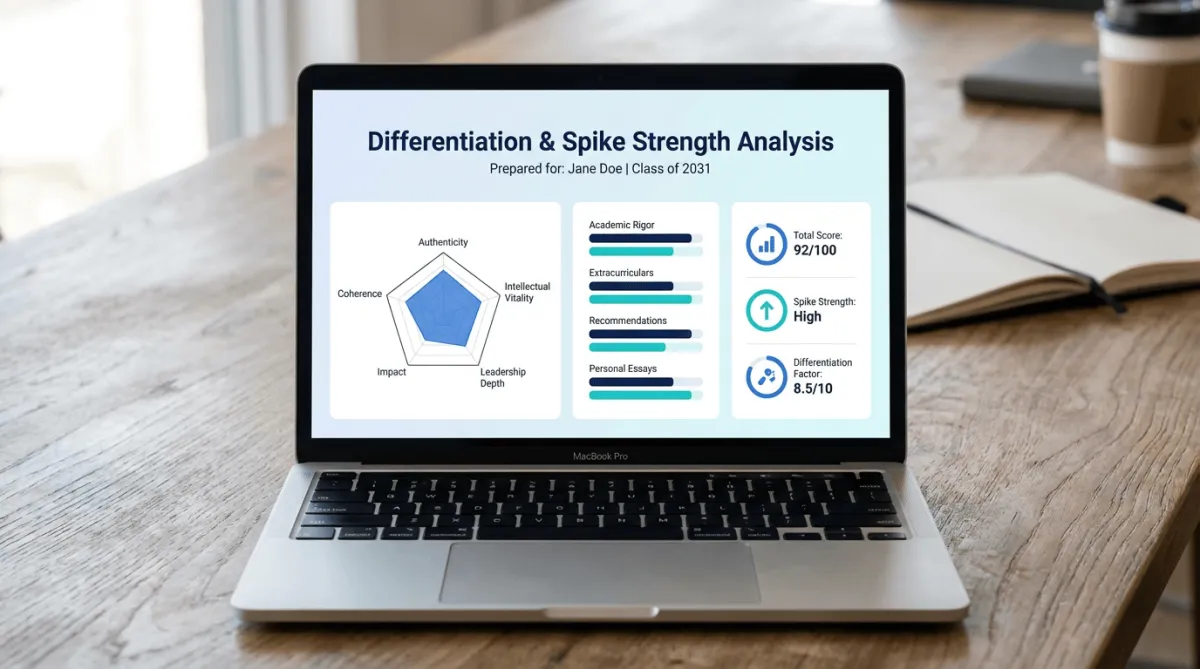
Differentiation & Spike Strength Analysis
Your child's profile scored across five critical dimensions:
Authenticity Score – Does this profile feel genuine or manufactured?
Intellectual Vitality Score – Does this show genuine curiosity and drive?
Leadership Depth Score – Is this real leadership or title collection?
Impact Score – Has your child created measurable change?
Coherence Score – Does this profile tell a unified story?
Each dimension includes:
✅ Current score and competitive benchmark
✅ Specific weaknesses identified
✅ Strategic improvement recommendations
✅ Examples of stronger positioning
This becomes the foundation for essay narratives later.
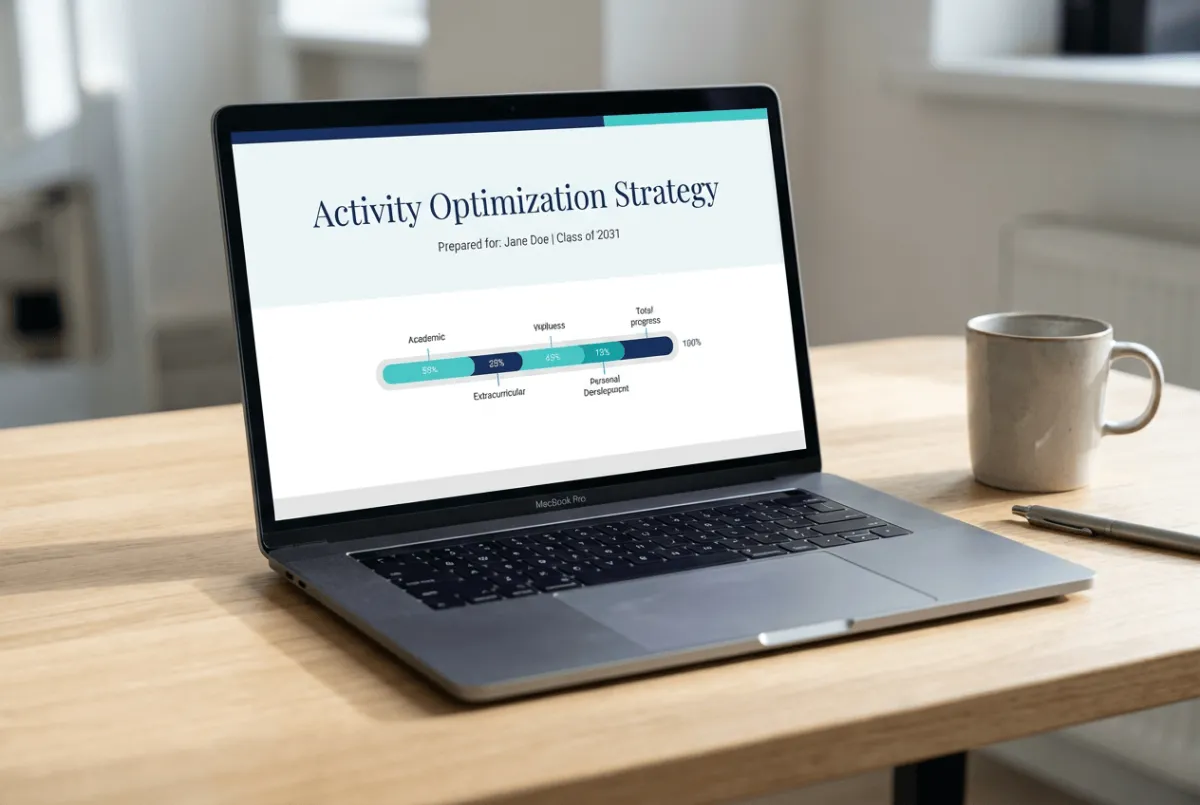
Activity Optimization Strategy
Not all activities are created equal. Here's what to do with yours:
Activities to Emphasize:
✅ Which experiences have the highest admissions value
✅ How to frame them for maximum impact
✅ Strategic positioning language
Activities to Reframe:
✅ Experiences that need different context
✅ How to connect them to your narrative
✅ Repositioning strategies
Activities to De-emphasize:
✅ What's taking space without adding value
✅ Resume padding that hurts more than helps
✅ Strategic omission recommendations
Gaps to Fill:
✅ What's missing from your profile
✅ Specific opportunities to pursue
✅ Timeline for implementation
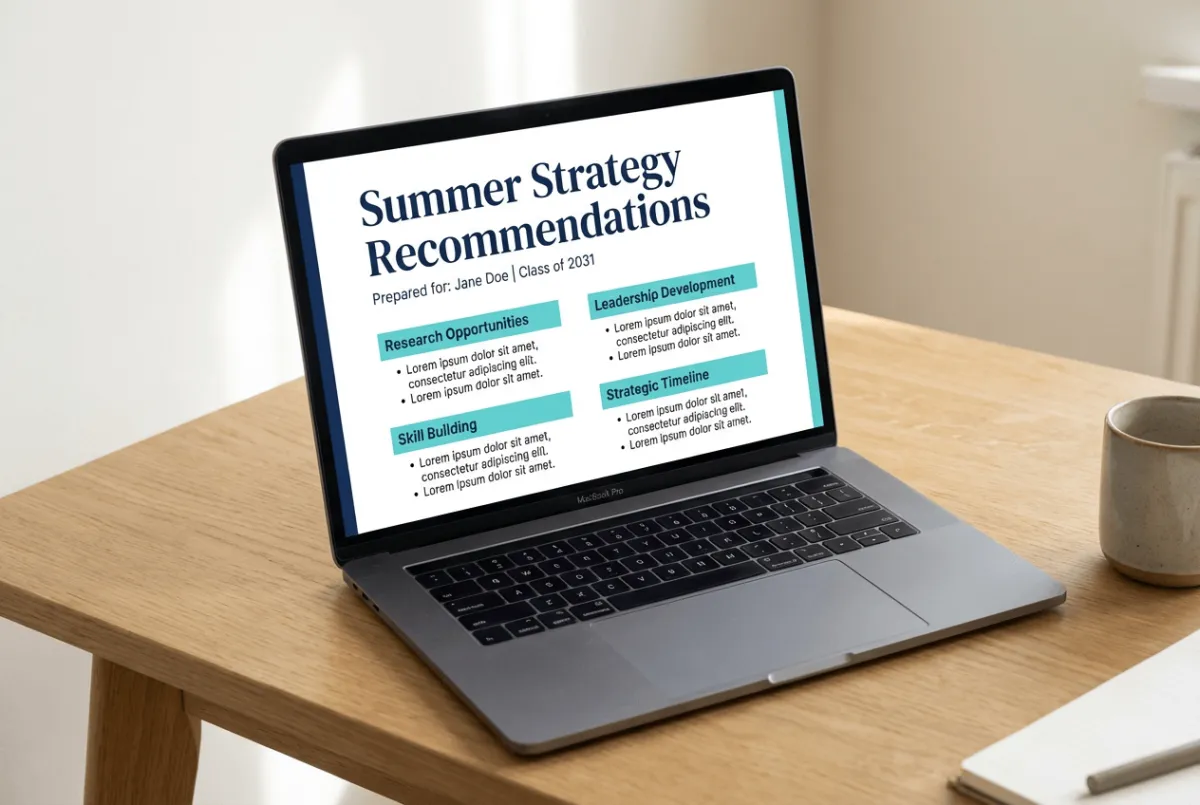
Summer Strategy Recommendations
This is where March timing creates massive advantage.
You'll receive specific guidance on:
Research vs. Internship vs. Passion Project:
✅ Which path aligns with your child's positioning
✅ How to secure competitive opportunities
✅ What admissions officers actually value
Leadership Leverage Opportunities:
✅ How to deepen existing leadership roles
✅ New positions to pursue
✅ Impact creation strategies
Skill-Building Recommendations:
✅ Technical skills that strengthen major positioning
✅ Certifications or programs worth pursuing
✅ Self-directed learning that demonstrates initiative
Strategic Positioning Moves:
✅ Specific actions to take before fall
✅ Timeline and implementation roadmap
✅ Risk mitigation strategies
Families who implement these summer strategies enter senior year with a 3-6 month advantage over their competition.
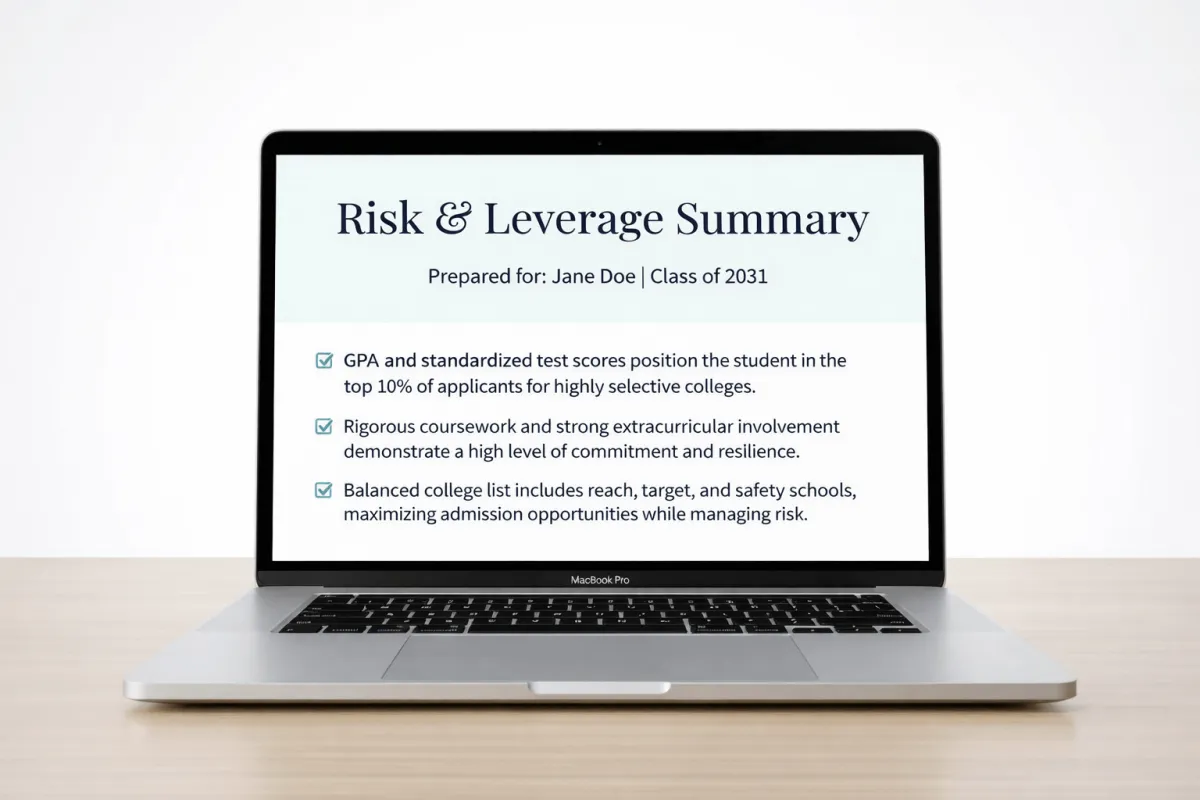
Risk & Leverage Summary
Clear, actionable intelligence you can use immediately:
Your Biggest Risk:
Example: "Applying Computer Science without distinct technical differentiation. In a pool of 8,000+ CS applicants to Top 20 schools, undifferentiated profiles are systematically filtered out during first-round review."
Your Biggest Leverage:
Example: "Strong mathematics rigor (Multivariable Calculus, Linear Algebra) combined with research experience creates authentic intellectual vitality narrative. This positions your child in the top 15% of STEM applicants for demonstrated academic curiosity."
Strategic Recommendations:
Example: "Priority 1: Secure summer research position in computational biology (bridges CS interest with differentiation). Priority 2: Develop significant technical project with measurable impact. Priority 3: Reframe robotics club leadership to emphasize teaching/mentorship dimension."
What Makes This Different from Everything Else
Most admissions consultants give you generic advice:
"Take challenging courses"
"Show leadership"
"Be authentic"
The Elite Admissions Readiness Assessment™ gives you the actual evaluation:
I know how elite schools assess applicants because I've been on the inside for a decade.
I understand the scoring systems, the committee dynamics, the unwritten rules that determine who gets in.
Your assessment includes:
✅ The exact frameworks admissions officers use to evaluate profiles
✅ Competitive tier calibration based on actual admissions data
✅ Major-specific risk assessment that most consultants miss
✅ Strategic positioning recommendations tailored to your child's profile
✅ Summer optimization strategy that creates measurable advantage
✅ Activity reframing guidance that transforms how your profile is perceived
This isn't generic consulting. This is insider intelligence.
TESTIMONIALS
Here's What Parents Are Saying:

"We thought our son was competitive for MIT until we got the Readiness Assessment. It identified three major positioning gaps we never would have seen. We spent the summer fixing them, and he was accepted early action. This assessment saved us from a devastating rejection."
Michael T., Parent of MIT '28
"The major competitiveness analysis was eye-opening. Our daughter wanted to apply Biology, but the assessment showed she had no differentiation in an incredibly saturated pool. We pivoted to Computational Biology with a summer research focus. She got into Stanford."
Jennifer K., Parent of Stanford '28
"As a parent, I had no idea how to evaluate whether my child was actually competitive. The Assessment gave us objective, expert analysis that completely changed our strategy. Worth every penny."
David L., Parent of Yale '28
"We hired a $10,000 consultant who told us everything looked great. The Readiness Assessment identified critical weaknesses the consultant missed. We course-corrected in time and our son got into Princeton."
Sarah M., Parent of Princeton '28

4.9/5 star reviews
The Investment Breakdown
If you were to get this elsewhere, here's what you'd pay:
💰 Private admissions consultant: $5,000–$15,000
💰 Profile evaluation: $2,000–$5,000
💰 MIT alumni advisor: $500/hour
💰 Major-specific positioning analysis: Not available at any price
💰 Summer strategy consulting: $1,500–$3,000
Total value if purchased separately: $15,000+
Your Investment Today: Just $197
That's less than:
3 hours with a private tutor ($450)
One SAT prep course ($300)
A single summer program app fee ($200)
1 month of generic admissions counseling ($1500)
For the price of a few tutoring sessions, you get strategic intelligence that could be worth $240,000+ in scholarship money.

"Best purchase ever!"
"My son and I feel so much more equipped to prepare him for the daunting college admission process."
Why March Is the Perfect Time (And Why Waiting Is Dangerous)
Right now, you have a strategic advantage:
Time to course-correct – Identify and fix problems before they're permanent
Summer optimization – Make strategic decisions about how to spend the next 4 months
Narrative development – Build authentic differentiation before essay season
Activity positioning – Adjust leadership roles and commitments strategically
Competitive calibration – Understand realistic target schools before you're emotionally invested
But this window closes fast:
April-May: Summer opportunities fill up, leadership positions are decided
June-July: Too late to build meaningful summer differentiation
August: Essay season begins—your positioning is locked
September-October: Application deadlines approach—no time for strategic changes
The families who start in March have a 6-month advantage over families who start in August.
By the time most parents begin worrying about essays, strategic families have already built the foundation for acceptance.

I Know What You're Thinking...
"My child has great grades and test scores. Aren't they automatically competitive?"
This is the most dangerous assumption parents make. At Top 20 schools, 89% of applicants are academically qualified. Your child's 4.0 GPA and 1520 SAT make them eligible for consideration—but stats alone don't create acceptance. Strategic positioning, differentiation, and narrative coherence determine who actually gets in.
"We're already working with a college counselor. Do we need this?"
Most school counselors are generalists managing 300+ students. They provide encouragement, not competitive calibration. This Assessment uses the actual frameworks MIT and other elite schools use to evaluate applicants. You're getting insider intelligence from someone who has sat in admissions committee rooms, not generic guidance from someone who hasn't.
"Isn't $197 expensive for a PDF report?"
Compare it to the alternatives:
• Private admissions consultant: $5,000-$15,000
• Wrong summer program: $3,000-$8,000 wasted
• Rejected applications: $240,000+ in lost scholarship opportunities
• Peace of mind knowing where your child stands: Priceless
The Assessment costs less than 3 hours with a private tutor but could be worth $240,000+ in scholarship money.
"What if the assessment reveals my child isn't competitive?"
Then you've just received the most valuable information possible—with enough time to do something about it. The Assessment doesn't just identify problems; it provides specific strategic recommendations for closing competitive gaps. Better to know now than after rejection letters arrive.
"My child is only a sophomore. Is it too early?"
Actually, sophomores have the MOST advantage. You have 18+ months to build differentiation, optimize positioning, and create competitive advantage. The earlier you start, the more options you have.
"What if we disagree with the assessment?"
The Assessment is based on 10+ years of MIT admissions experience and evaluation of 200+ applications. But if you genuinely believe the analysis is inaccurate, we offer a full refund within 14 days. No questions asked.
"Can't we just figure this out ourselves?"
You could spend months researching admissions forums, reading books, and trying to decode the process. Or you could get insider intelligence from someone who has actually evaluated applications and sat in committee discussions. Most families who "figure it out themselves" discover the gaps after it's too late to fix them.
"What if my child gets rejected anyway?"
Admissions is never guaranteed—anyone who promises that is lying. What I can guarantee is that you'll know exactly where your child stands competitively and what strategic moves to make. You'll have done everything possible to position them for success. No regrets. No "what ifs."
STILL GOT QUESTIONS?
Frequently Asked Questions
My child is a junior/sophomore and hasn't written their essay yet. Is this still relevant?
This is EXACTLY the right time. The Assessment isn't about essays—it's about strategic positioning. We evaluate your child's academic rigor, activity profile, major competitiveness, and differentiation strength. This creates the foundation for strong essays later. March is positioning season, and you're perfectly timed.
For high-achieving juniors/sophomores targeting elite schools, this is actually ideal timing. You have even more runway to implement strategic recommendations, build differentiation, and optimize positioning. The earlier you start, the more advantage you create.
What information do you need from us?
You'll complete a structured intake form that takes about 15 minutes. We need: GPA, course rigor (AP/IB/Honors), test scores (if available), top 5 activities with leadership roles, awards, research/internships, intended major, target schools, and your biggest admissions concern. That's it.
How is this different from a college counselor's evaluation?
Most school counselors are generalists managing 300+ students. They provide encouragement, not competitive calibration. The Assessment uses the actual frameworks MIT and other elite schools use to evaluate applicants. You're getting insider intelligence from someone who has sat in admissions committee rooms, not generic guidance from someone who hasn't.
What if my child doesn't know their intended major yet?
That's fine. We'll evaluate their profile for positioning flexibility and identify which major directions create the strongest competitive advantage. Sometimes "undecided" is actually the strategic choice—we'll tell you when that's the case.
Will this tell us which schools my child should apply to?
The base Assessment provides competitive tier calibration (Top 50, Top 30, Top 20 positioning). If you're in the first 50 families, you also get the Target School Calibration Add-On, which includes school-by-school competitiveness assessment and strategic application list recommendations.
My child has a 4.0 GPA and 1520 SAT. Aren't they automatically competitive?
This is the exact misconception that leads to devastating rejections. At Top 20 schools, 89% of applicants are academically qualified. Your child's stats make them eligible for consideration—but stats alone don't create acceptance. Strategic positioning, differentiation, and narrative coherence determine who actually gets in. The Assessment shows you where your child stands beyond the numbers.
What if the assessment reveals my child isn't competitive for their target schools?
Then you've just received the most valuable information possible—with enough time to do something about it. The Assessment doesn't just identify problems; it provides specific strategic recommendations for closing competitive gaps. Many families discover they need to adjust their target list, reposition their major, or build summer differentiation. Better to know now than after rejection letters arrive.
How quickly will we receive the assessment?
Guaranteed within 3 business days of intake form submission. Most assessments are delivered within 3 days. You'll receive an email notification the moment your assessment is ready.
Can you guarantee my child will get into their dream school?
No one can guarantee admissions outcomes—anyone who promises that is lying. What I can guarantee is that you'll receive honest, expert analysis of your child's competitive positioning with specific strategic recommendations for improvement. The Assessment has helped students get into MIT, Stanford, Harvard, Yale, Princeton, and dozens of other top schools. But ultimately, admissions decisions involve many factors beyond positioning.
What makes you qualified to evaluate my child's competitiveness?
I'm an MIT graduate who has served as an MIT admissions interviewer and educational counselor for over a decade. I've evaluated thousands of applications, participated in committee discussions, and seen firsthand what separates accepted students from rejected ones. I understand the rubrics, the unwritten rules, and the committee dynamics that determine who gets in. This isn't theory—it's insider knowledge from someone who has been in the room where decisions are made.
Is this only for students applying to Ivy League schools?
The Assessment is designed for students targeting Top 50 universities and highly selective programs. While the insights are based on elite school admissions, the strategic positioning principles apply to any competitive institution. Whether your child is targeting MIT, UC Berkeley, or your state flagship honors program, the Assessment provides valuable competitive intelligence.
What if we're already working with an admissions consultant?
The Assessment complements existing consulting relationships by providing objective, insider analysis. Many families use it as a "second opinion" to validate their consultant's guidance. Some discover their consultant has missed critical positioning gaps. Either way, you gain clarity and confidence in your strategy.
What happens after we receive the assessment?
You'll have complete clarity on your child's competitive positioning and a strategic roadmap for improvement. Many families implement the recommendations independently. Some choose to upgrade to the Strategic Positioning Blueprint ($997) for ongoing implementation guidance through August. The choice is yours—there's no pressure to upgrade.
What if I am not satisfied with the assessment we receive?
If for any reason you don't find the assessment report insightful for your child, just send me an email and I'll refund you in full. No questions asked. (I've never had to refund anyone because every single family who received their report has found it filled with invaluable insights they had never thought about.) Nonetheless I want you to be 100% satisfied so I offer this guarantee regardless.
What's at stake is not just college
Your child's entire future:
The network they'll build
The opportunities they'll access
The confidence they'll develop
The trajectory they'll follow for the next 50 years
This assessment could determine all of that.
Give Your Child the Strategic Advantage They Deserve
Your Child Has Worked Too Hard to Let Positioning Errors Hold Them Back
They've earned the grades. They've aced the tests. They've built the resume.
Don't let fixable positioning gaps be the reason they don't get in.
Copyrights 2026 | All rights reserved. This is not affiliated with MIT or any other educational institution. Results vary based on individual circumstances and implementation. | Terms & Conditions